
Plumbing Installation
in Rustenburg
Plumbing installation in Rustenburg has to suit the ground, and the region's black clay swells when a pipe leaks into it. Every joint is pressure-tested before walls and slabs close, and pipes through the slab are sleeved so they can move. For weak taps in an existing house, see water pressure repairs.
Request a call-out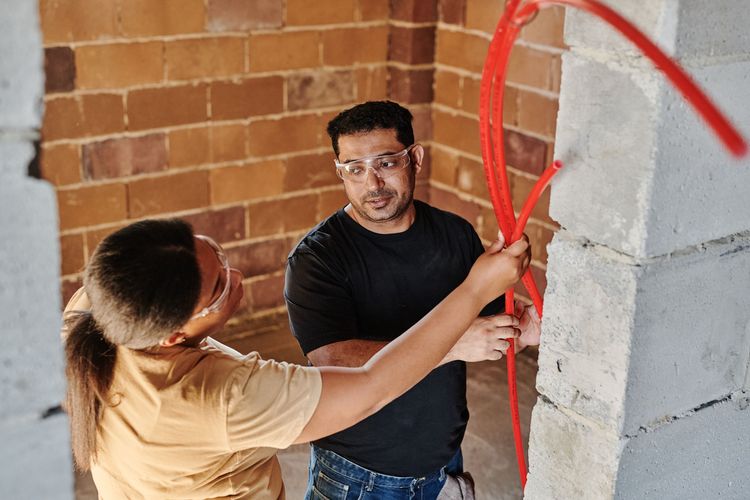
Plan an installation
Say what is being built or changed. A plumber calls you back to arrange a site visit.
Every installation is tested before it is covered
On a new build or an old house, every line is put under pressure before it disappears into a wall or slab.
-
New build plumbing
Supply, waste and vent pipes laid to the plans, then pressure-tested before the slab is poured and again before the walls are closed.
-
Additions and extensions
New points joined to the existing system, with an isolating valve so the new section can be shut off on its own.
-
Re-piping
Failing pipe replaced section by section, once a test has shown which sections are failing. Supply and waste are quoted on separate lines.
-
JoJo tank installation
The tank on a level, compacted base, with its overflow led away from the house and a valve to switch between tank and mains.
-
Booster pumps
Fitted with a dry-run cut-out so the pump stops before the tank empties, and a bypass so the house still gets mains water if the pump fails.
-
Sewer and stormwater lines
Laid to fall away from the house, with downpipes discharged well clear of the foundations so roof water does not soak the ground beside them.
Black clay around Rustenburg swells when pipes leak into it
A technical report on the Rustenburg mining operations describes "the black vertic clay soils of the flat plains of the North West". Engineers know this kind of ground as black turf: a 2020 paper in the Journal of the SAIMM describes "residual norite, also known as black turf", a weak clay left where Bushveld Complex rock has weathered, and a 2026 SAIMM conference paper is titled "Characterisation of the reworked residual norite in the Rustenburg Region". Whether your own stand sits on it is a question for a soil report, not a website.
Clay like this swells when it gets wet and shrinks as it dries, and it lifts whatever sits on it. The CSIR's national guide to foundations calls expansive clays "the commonest cause of trouble in South Africa" and says "the heave on an ordinary house can easily reach seven centimetres". That is national guidance, not a measurement from Rustenburg. The same guide names one cause plainly: "Leaking pipes and sewers increase the volume of water fed to the clay."
That is where plumbing comes in. A slow leak under a slab or beside a foundation wets the clay in one place, so one part of the house can rise while the rest stays put. Walls and floors crack, and a pipe set rigidly in the slab can be pulled apart at its joints.
So on a new build, an addition or a re-pipe, the method matters as much as the material. Every joint is pressure-tested before the walls are closed and before the slab is poured, so a leak shows on a gauge rather than as a crack a year later. Where pipes pass through the slab or a foundation wall, they run through a sleeve or a flexible connection, so the building can move a little without shearing them. Sewers and stormwater are laid to fall away from the house, and downpipes discharge clear of the foundations.
The other thing a Rustenburg installation has to allow for is the supply. Water here has been rationed by the clock, with restrictions "from 5pm every evening to 5am every morning" in 2019 and a water-shedding timetable in December 2024. A tank with a booster pump carries the house through those hours, but the pump must be connected so it cannot run dry: a float switch or low-level cut-out stops it before the tank empties. The tank stands on a level, compacted base, because a full tank is heavy and soft clay settles.
On clay, a leak is never only a water bill. Ask for every joint to be pressure-tested before it is covered, and for every pipe through the slab to be sleeved.
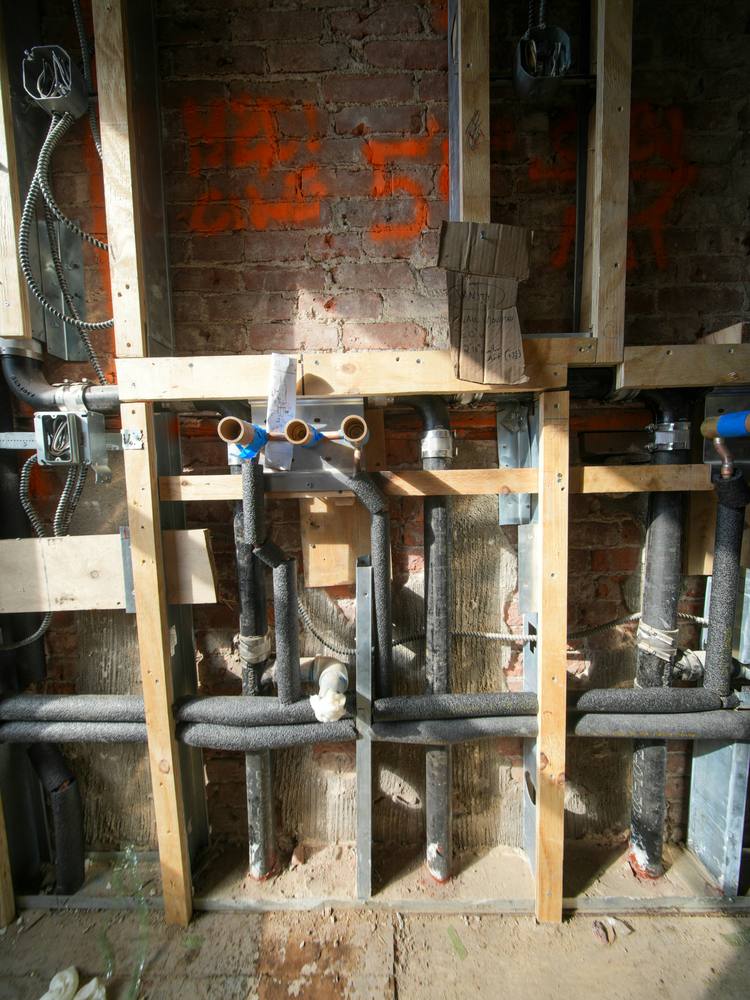
Standards on new pipework
New plumbing stays buried in walls and slabs for decades. These four habits are about what happens after it is covered.
Pressure-tested while visible
Supply lines are tested with the joints still in view, before plaster, tiles or concrete. You are welcome to watch the gauge.
Built to move a little
Sleeves or flexible connections go wherever a pipe passes through the slab or a foundation wall.
A quote that stays the quote
Every point, fitting and stage is listed. Nothing is added to the bill without your written OK.
A record of where the pipes run
Photos of every pipe run before it is covered, so nobody has to open the wrong wall later.
How an installation job runs
New work starts with a site visit, so the price is based on the building, not a guess.
What you do
- Send the call-out form
Say what is being built or changed, and whether there are approved plans.
- Share the plans
Building plans or a sketch of the new layout, and the builder's programme if there is one.
- Agree the test dates
Fix with the plumber when the pressure tests happen, so they come before the plaster, tiles and slab.
What the plumber does
- Visit the site
The supply, the sewer connection, the ground and where any tank will stand.
- Quote by point and stage
Each point, tank, pump and stage of work priced in writing.
- First fix and test
Pipes laid and sleeved through the slab, then pressure-tested before anything is covered.
- Second fix
Taps, toilets, geyser, tank and pump connected, and the pump's dry-run cut-out checked.
- Final test and handover
Everything tested again, photos of the pipe runs handed over, and an itemised invoice.
Installation questions from Rustenburg builds
For anything about your own build, use the call-back form and raise it when the plumber calls.
How much does a plumber charge per point?
There is no standard per-point rate, because a point can be a tap, a toilet or a shower, and the pipe run to each one differs. As a market guide, Rustenburg plumbing directories list labour at about R360 to R900 an hour in 2026, with fittings and pipe on top. Here each point is listed and priced in writing once the plans or the site have been seen. See plumbing prices for more on rates.
How much is a JoJo tank installation with a pump?
It depends on the tank size, the pump, the base the tank stands on and how far the pipes and power have to run, so it is quoted after a site visit. The quote lists the tank, pump, base, fittings and labour on separate lines. You are told the call-out fee when the plumber phones. A dry-run cut-out and a mains bypass belong in that price, not as extras.
Is the quote fixed, or can extra hours be added later?
The quote covers the work written on it, and nothing is added without your written agreement. If something unexpected turns up, such as a sewer line in a different place from the plans, work on that part stops and you get a written price for it before it goes ahead. That keeps the bill the size you agreed.
What is a plumbing CoC and what does it entail?
A plumbing certificate of compliance is a document from a plumber registered with the PIRB, stating that the work meets the national standards: SANS 10252 for water supply and drainage, and SANS 10254 for geysers. The plumber inspects and tests the installation before issuing it. Since June 2022 an electric geyser no longer needs one under SANS 10254, but solar geysers and heat pumps still do, and insurers and municipalities often still ask for one. Ask to see the plumber's PIRB registration card before the work starts.
Do I need a plumbing certificate for an occupation certificate on a new build?
Often, yes, but the documents needed are set by the municipality's building control. Ask Rustenburg Local Municipality's building control which certificates they want before they issue the occupation certificate, ideally when your plans are approved. Whoever does the plumbing should be able to issue a plumbing certificate, so ask to see their PIRB card at the start, not at the end.
Can you replace the plastic pipes in my ceiling with copper?
Yes, though it is worth having the plastic checked first. Plastic supply pipe of the right class, properly clipped and joined with the correct fittings, is not a problem in itself, and copper costs more. Where it is failing at the fittings, or near the geyser where the pipe runs hottest, replacing those sections in copper makes sense. The quote shows which sections and why.
Who is responsible for the plumbing CoC when selling a house?
The seller, if one is needed. Some municipalities, Cape Town among them, require a plumbing certificate when a property is transferred, so check with your conveyancer and your sale agreement whether one is asked for in your case. If it is, the plumber inspects and tests the installation, and anything that fails has to be put right before the certificate is issued.
Can leaking pipes make the walls of my house crack?
On clay ground, they can. The CSIR's foundations guide warns that "leaking pipes and sewers increase the volume of water fed to the clay", and wet expansive clay swells and lifts the part of the house above it. If cracks appear near a bathroom, kitchen or drain, have the pipes tested before the cracks are patched, and ask a structural engineer about the cracks themselves. Fixing the leak first stops more water reaching the clay.
Ask for a call back
Leave your number and the best time to reach you. A plumber phones, asks what is happening and books the visit.
Call-back request
Where we work
Every suburb of Rustenburg and the villages and mining towns around it.
- Rustenburg CBD
- East End (Oos-Einde)
- Rustenburg North
- Zinniaville
- Karlienpark
- Geelhoutpark
- Protea Park
- Safari Gardens
- Cashan
- Boschdal
- Waterfall East
- Azalea Park
- Waterkloof
- Tlhabane
- Tlhabane West
- Boitekong
- Meriting
- Seraleng
- Paardekraal
- Sunrise Park
- Freedom Park
- Kanana
- Phokeng
- Luka
- Kroondal
- Photsaneng
- Mfidikwe
- Marikana
- Bethanie
- Olifantsnek
Not on the list? Put your area in the form and we will tell you straight if it is too far.