
Pool Leak Detection
in Rustenburg
Pool leak detection in Rustenburg starts with a bucket on the step, because hot summers take water out of every pool. If the bucket says leak, each line and fitting is tested on its own, and paving is lifted only where the leak has been found. For damp in the house, see leak detection.
Request a call-out
Report a pool losing water
Say how fast the level drops and whether you have done the bucket test. A plumber calls you back.
How a pool loses water, and the test for each
Joints, fittings and buried pipes are where pool water usually gets out. Each one has its own test.
-
Cracks in the shell
Fine cracks in the plaster or a gap behind the waterline tiles. A drop of dye held beside the crack in still water shows whether it is being drawn out.
-
The weir joint
The joint where the skimmer box meets the shell can open as the ground moves. It can usually be resealed without draining the pool.
-
Return pipes under the paving
These carry water back from the filter under pressure, so a crack leaks hardest with the pump on. Each one is capped and pressure-tested on its own.
-
Suction lines and the pump
Air bubbles from the return jets, or a pump that keeps losing its prime, point to the suction side, where a leaking pipe draws air in. Drips at the pump unions show on a dry floor.
-
Multiport valve running to waste
A worn spider gasket inside the filter valve lets water run out of the backwash pipe all day. Check the waste outlet with the pump running.
-
Lights, steps and fittings
The conduit behind a pool light and the seals around fittings are paths for water. Dye in still water around each one finds a slow seep.
Rustenburg's summer evaporation can hide a pool leak
Rustenburg's IDP describes the area as having "high evaporation rates, especially in summer". Summer here is hot, with average midday highs of about 30°C in January by the municipality's figures. A pool is a wide sheet of open water in full sun, so it loses some water every day whether or not anything is broken. How much varies with the sun, the wind and the heat, so a falling level on its own tells you very little.
The rain muddies it further. Rain here falls "predominantly between November and March, mainly as thunderstorms", according to a technical report on the Rustenburg mining operations, and January is the wettest month in the IDP's figures. One storm can put back in an afternoon what a slow leak took over a week. In the dry months, with little rain to top it up, a leak shows more plainly.
Topping up is not always an option either. In October 2013, a Rustenburg.biz community post quoted the municipality as "prohibiting watering of gardens and filling of swimming pools". In December 2024, with Vaalkop Dam down to about 23%, SABC News reported the municipality giving out water "per schedule". A pool that leaks is losing water you may not be able to put back when supply is short.
The bucket test settles it. Stand a bucket of pool water on one of the top steps, where it gets the same sun, wind and heat as the rest of the pool. Mark the water level inside the bucket and the pool level on the outside, leave the pump on its normal cycle for 24 hours without swimming or topping up, and compare the two drops. Any drop in the pool beyond what the bucket lost is water escaping somewhere.
Then repeat it with the pump off. A pool that loses more with the pump running usually has a leak in the return pipes, which are under pressure; one that loses more with it off points to the suction side; and a loss that stays the same either way points to the shell or a fitting such as a light. That tells you which half of the system to test before any paving is touched. Then the lines are sealed off and tested under pressure one by one, and the shell and fittings are checked with dye in still water.
Run the bucket test twice before booking anyone: one day with the pump running and one day with it switched off. If the pool drops faster than the bucket it is leaking, and the two results show where to start.
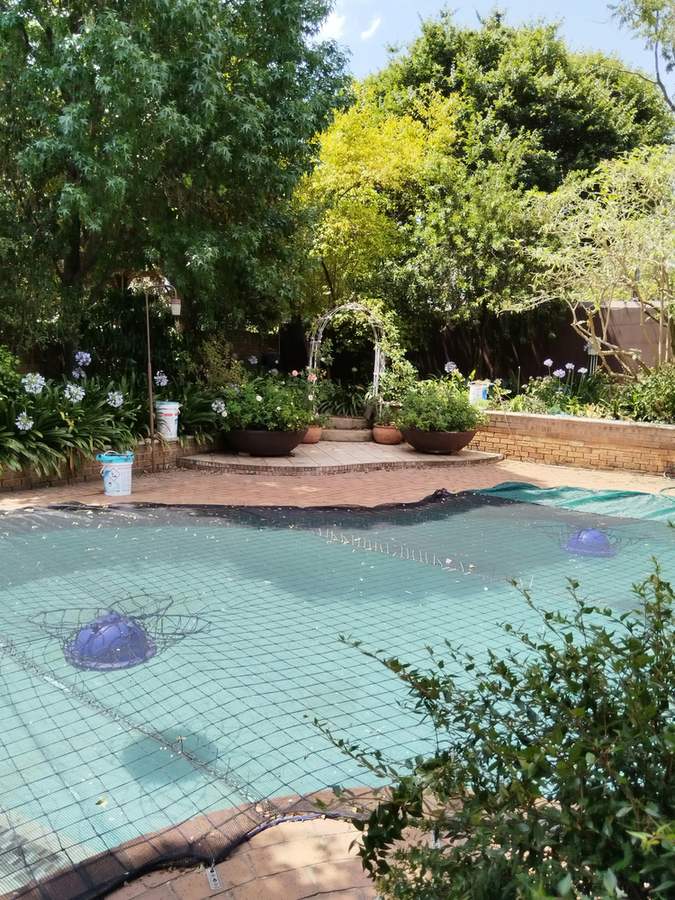
Settled before any paving is lifted
A pool leak hunted by guesswork ends in a broken pool surround. These rules keep the search on the leak.
Evaporation ruled out first
Your bucket test is checked, or run again, before any line is tested. If the pool is losing no more than the bucket, you are told it is evaporation.
One line at a time
Returns, suction lines and the weir are capped and tested separately, so the leak is narrowed to a single pipe or fitting.
Paving lifted over the leak only
The spot and the size are agreed with you first. Where the pavers allow it, they are lifted and stacked for relaying, not broken.
A written price and a record
You hear the call-out fee when the plumber phones, and the repair is quoted on paper. Photos and an itemised invoice are there if you claim.
How a pool leak call-out works
The bucket test on your side, the pressure tests on ours.
What you do
- Send the call-out form
Say how much the level drops in a day and whether it changes with the pump on or off.
- Run the bucket test
Twenty-four hours with the pump on, then twenty-four with it off. Note both results.
- Leave the level alone
No topping up or backwashing the day before the visit, so the pool is at its normal level.
What the plumber does
- Read the results
Your bucket figures compared, and the pump-on and pump-off losses checked against each other.
- Check the equipment
Pump, filter, multiport valve and waste line inspected for drips and water running to waste.
- Test the lines
Each return and suction line capped and pressure-tested on its own.
- Dye-test the shell
Cracks, the weir joint, lights and steps checked with dye in still water.
- Show, quote, repair
What leaked is shown to you with a written price, then repaired and the level watched again.
Pool leak questions from Rustenburg homeowners
Put any other pool question in the call-back form and it gets answered on the call.
How much does pool leak detection cost?
It depends mostly on how many lines have to be tested and whether anything must be dug up to reach the leak. As a market guide, the Kandua price guide (July 2026) puts household leak detection and repair at about R1,200 to R2,800, and a pool with several return and suction lines can take longer. The call-out fee is given to you when the plumber phones, and the repair is quoted in writing once the leak is found. Doing the bucket test first costs nothing and may show there is no leak at all.
Is my pool leaking, or is it just evaporation?
The bucket test tells you. Stand a bucket of pool water on a step, mark the level inside it and the pool level outside it, and compare them after 24 hours without swimming or topping up. A pool that loses more than its bucket is losing water through a hole, not into the air. If both have dropped by the same amount, it is evaporation.
Why does my pool lose water only when the pump is running?
That usually points to the pressure side: the return pipes that carry water from the filter back to the pool, or the fittings at the pump and filter. With the pump off those pipes are not under pressure, so the leak slows or stops. Check the backwash or waste line too, because a worn spider gasket in the multiport valve sends water to waste whenever the pump runs.
How do you find a pool leak without breaking the paving?
By testing rather than digging. Every return and suction line is tested separately under pressure, which shows which pipe is leaking, while the shell, weir and fittings are checked with dye in still water. Only once a line has failed its test is the route narrowed down, and paving is lifted at the spot agreed with you.
Will my insurance pay for a leaking pool pipe?
It depends on your policy, and the pipe itself is often excluded. In posts on MyBroadband in 2011, one pool owner was told by an insurer that damaged pool pipes were not covered, and another reported a cap of about R5,000 per event. Read your schedule or ask your broker before work starts. If you do claim, photos of the leak and an itemised invoice help the assessor.
Can a leaking weir or skimmer be fixed without draining the pool?
Usually, yes. The water only has to come down below the weir, not out of the pool, and the joint between the weir and the shell is then cleaned and resealed. A weir box that has cracked right through may need more work, which is quoted once it has been seen.
How much water loss per day is normal for a pool in summer?
There is no single normal figure. Evaporation changes with the sun, the wind, the heat and whether the pool is covered, so a number that suits one pool on one day can be wrong for the next. The bucket test answers it for your pool: whatever the bucket loses is that day's evaporation, and anything the pool loses beyond that is a leak.
Will a pool cover stop my pool losing water?
It cuts evaporation, because it keeps sun and wind off the water, but it does nothing for a leak. If a covered pool keeps dropping, take the cover off and run the bucket test with the pump on its normal cycle, then again with the pump off. A cover also helps when water is short, because less has to be put back.
Ask for a call back
Leave your number and the best time to reach you. A plumber phones, asks what is happening and books the visit.
Call-back request
Where we work
Every suburb of Rustenburg and the villages and mining towns around it.
- Rustenburg CBD
- East End (Oos-Einde)
- Rustenburg North
- Zinniaville
- Karlienpark
- Geelhoutpark
- Protea Park
- Safari Gardens
- Cashan
- Boschdal
- Waterfall East
- Azalea Park
- Waterkloof
- Tlhabane
- Tlhabane West
- Boitekong
- Meriting
- Seraleng
- Paardekraal
- Sunrise Park
- Freedom Park
- Kanana
- Phokeng
- Luka
- Kroondal
- Photsaneng
- Mfidikwe
- Marikana
- Bethanie
- Olifantsnek
Not on the list? Put your area in the form and we will tell you straight if it is too far.